TRAVEL. FOOD. DESIGN. ThereGoesSaraRose.com
There’s a particular kind of magic you only feel when you walk — but not just from one destination to the next without noticing the environment . No, when you move slowly enough, notice carefully enough, the stones beneath your feet start to whisper. The streets, buildings, and harbors of Old Monterey do that. On my walk through the historic district of Old Monterey, I found more than just pretty architecture or seaside charm — I found layered time, complexity, and memory. I’d planned to explore the Wharf when history caught my eye first! It felt more like meeting the beginning of a place rather than just sightseeing.
Where the Walk Begins: At the Water’s Edge
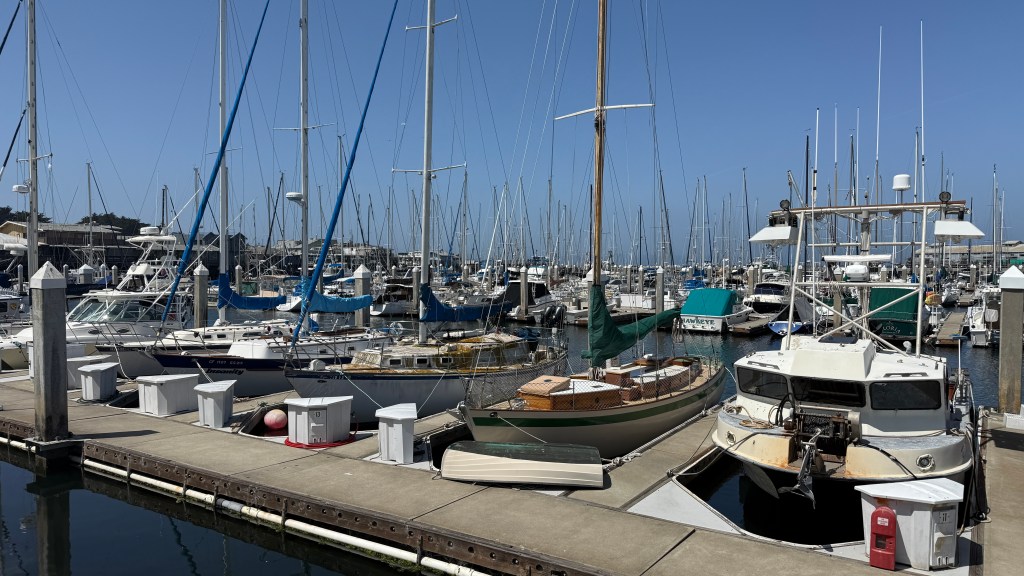
Most journeys into Old Monterey start near the marina, where rows of masts rise like a makeshift forest and the water holds that familiar Pacific calm. Boats bob in their slips, gulls coast overhead, and the sense of the modern coast is strong — leisure, sailing, movement, sunlight.
But just a few steps away, the past emerges.
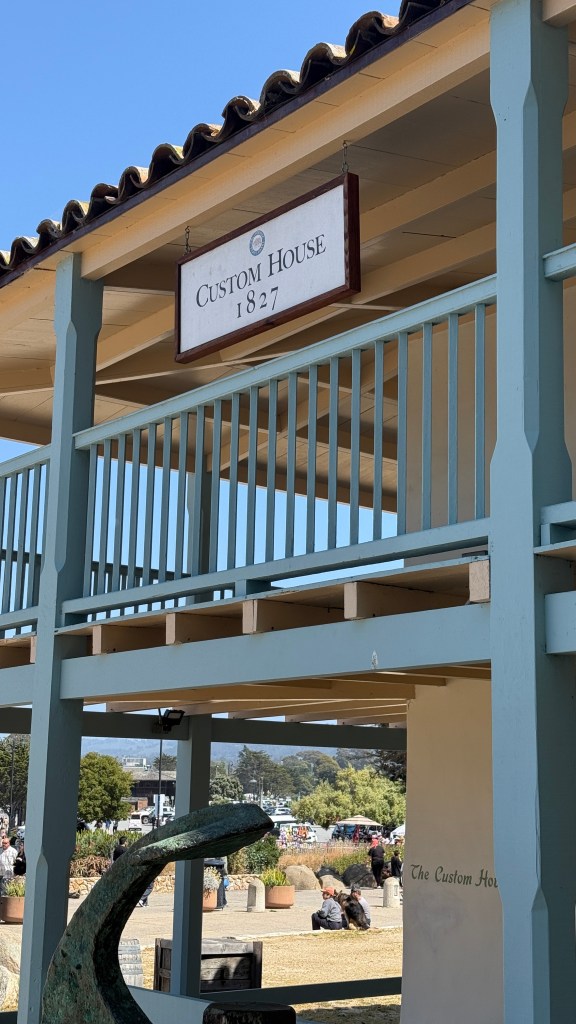
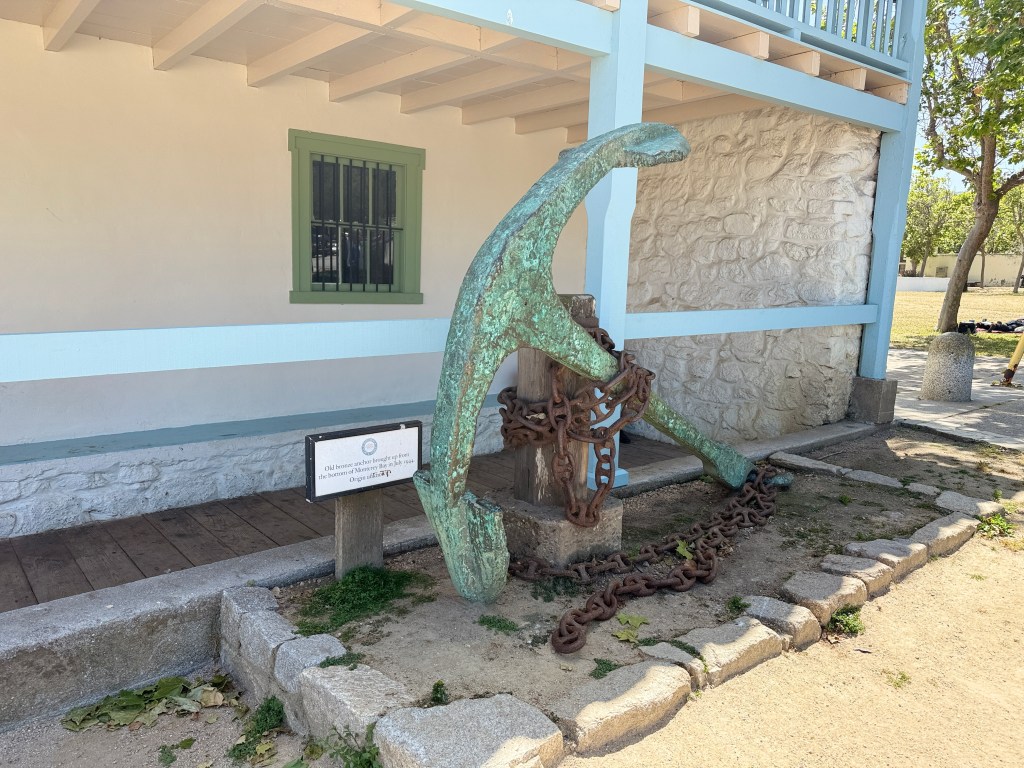
The Custom House, California’s oldest government building, sits right beside the shoreline. Its pale adobe walls and teal-painted beams speak to an era when the harbor wasn’t about weekend cruises but international trade, political power, and constant change. A massive bronze anchor rests nearby, weathered into a green patina — a quiet reminder that Monterey has always been shaped by arrivals, ambitions, and the inevitability of movement. There was a sign outside the Custom House, “FREE TOUR,” and it was starting in only a few minutes?! Immediate YES.
Following the Path of History
Before we begin I am shocked to learn I stand at California’s first Government building, “The Custom House.” Now a museum, it is only the starting point of the tour today. As we leave the museum, we are shown, embedded in the pavement, a small circular medallion which said:
Chemin de l’Histoire — the Path of History.
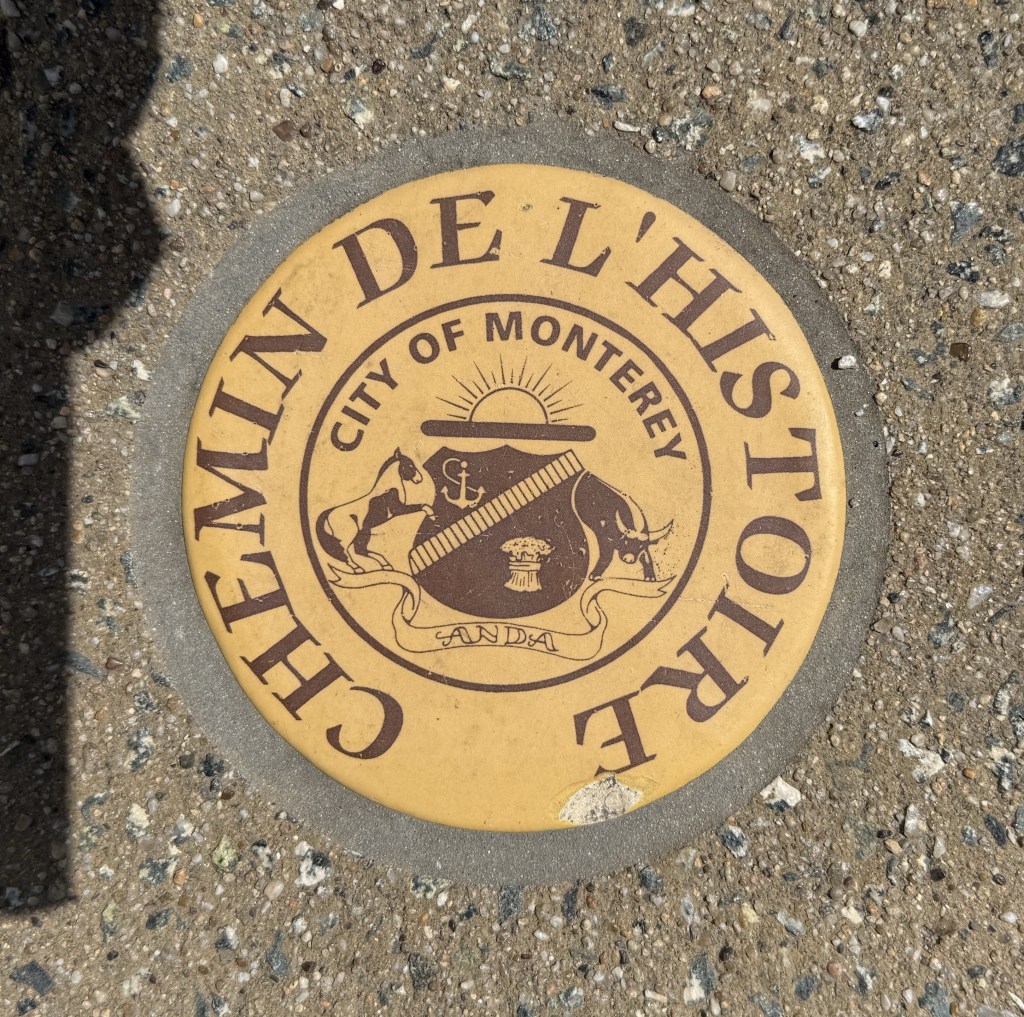
Following these markers takes you along a self-guide tour as well! It feels like being gently guided into Monterey’s layered past.
From what I learned, before Spanish or Mexican governance, long before the American flag rose over the Custom House, this land held lives like the Rumsien people for thousands of years. Their presence is the foundation beneath everything — the gardens, the wharf, the street grid, the adobes.
That awareness shifts the pace.
You begin to walk differently.
More present. More curious.
And the city rewards that curiosity.
Streets Where Eras Overlap
One of the first structures along the path is the First Brick House, built in 1847. It’s small and unassuming — the sort of place someone could walk by without much notice — yet it represents the moment Monterey shifted from adobe to brick, from traditional building methods to new ones brought by newcomers.
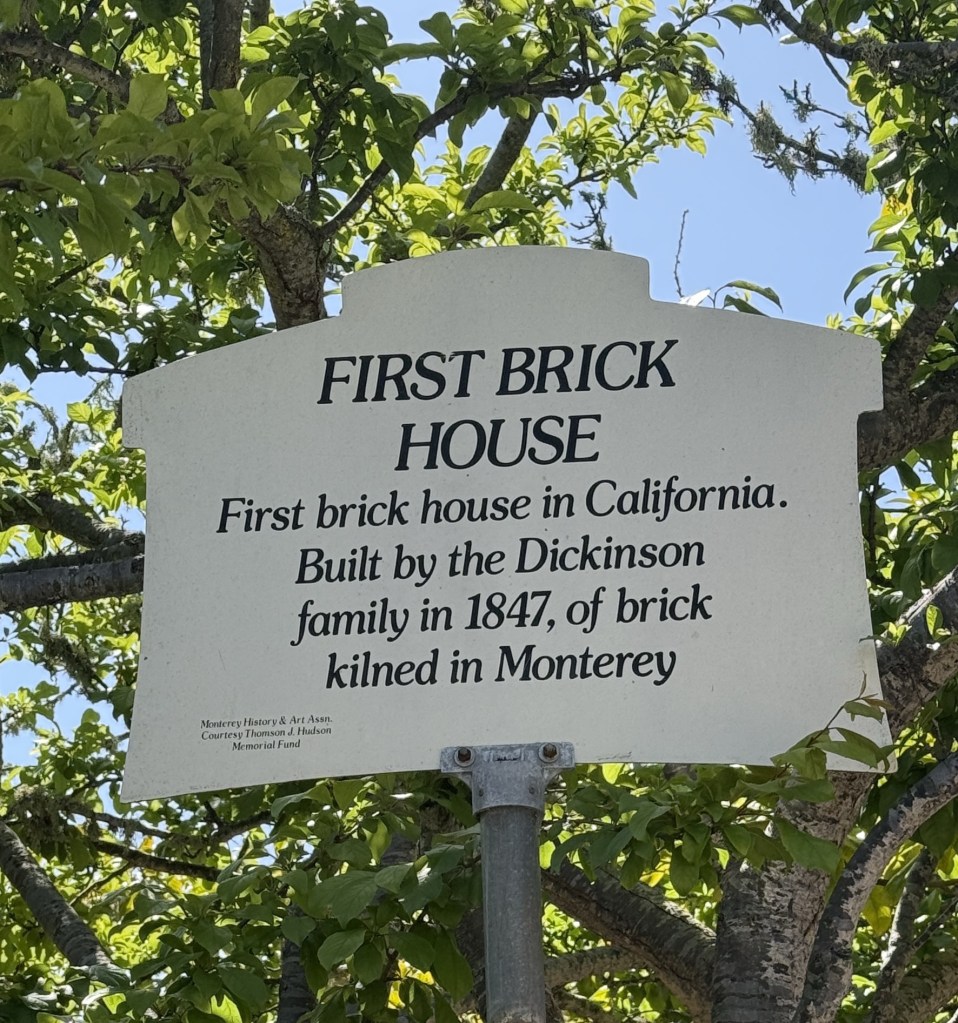
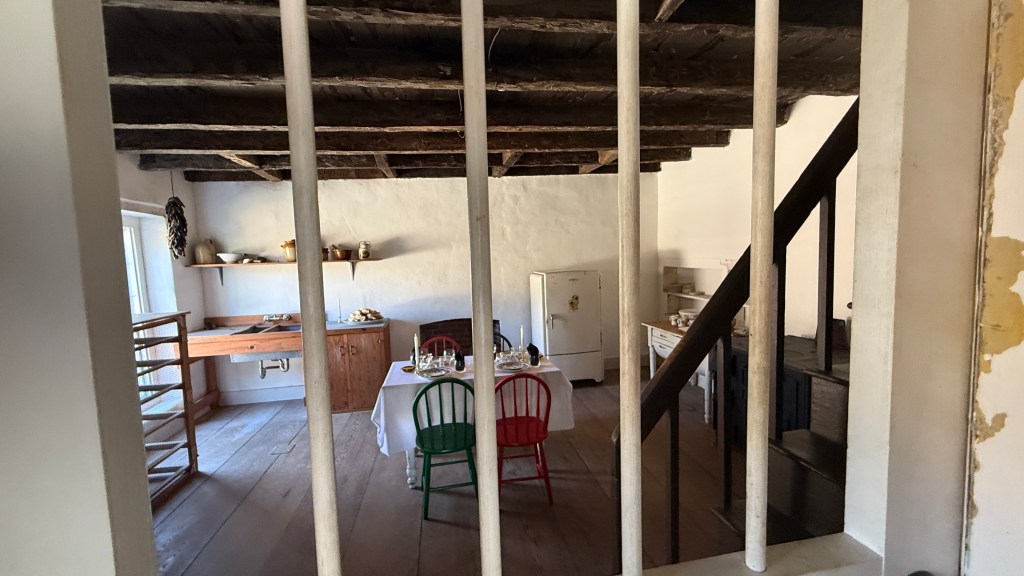
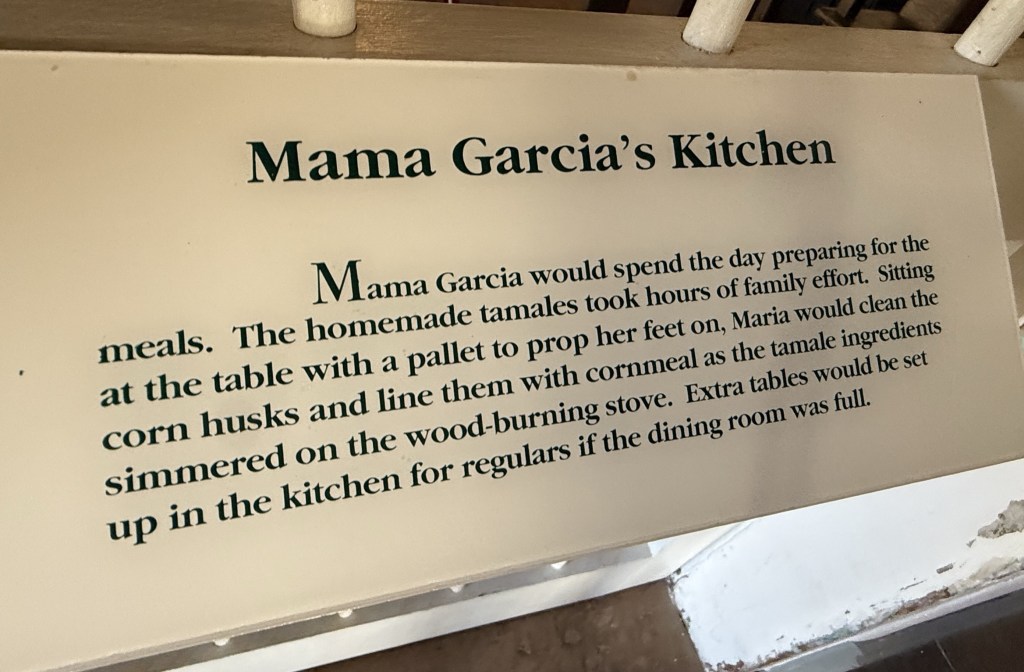
Just beyond it, you encounter a different chapter entirely: the maritime world of the mid-1800s. At the Old Whaling Station, a huge iron try-pot sits in the courtyard, once used to melt whale blubber into oil. Nearby lies the rare whalebone sidewalk, a checkerboard of white and weathered blocks — a physical remnant of a global industry that shaped this coastline long before tourists shaped it in other ways.
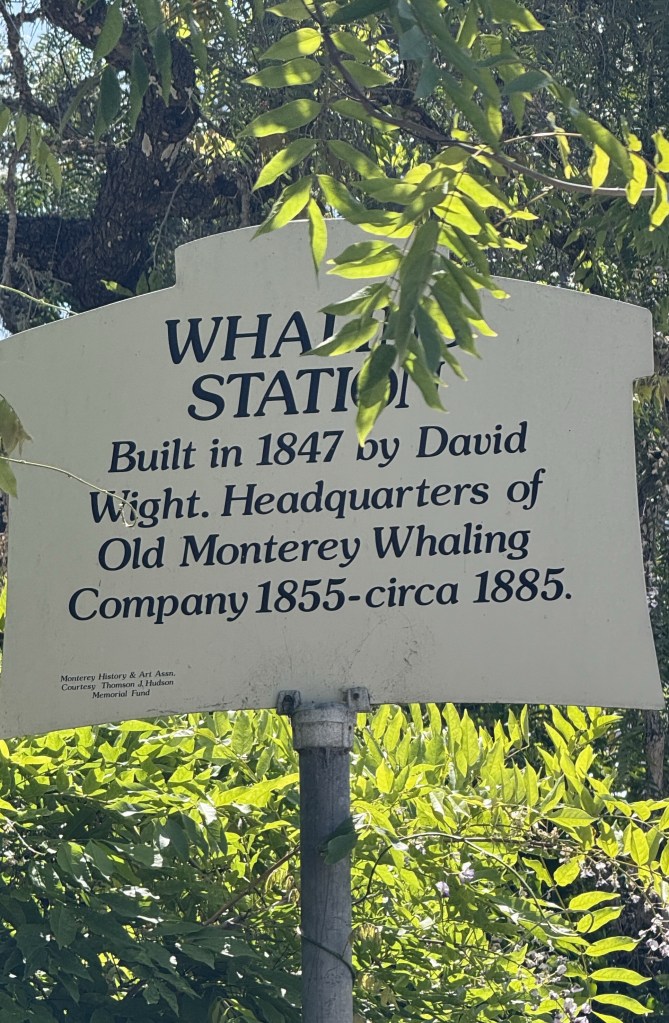
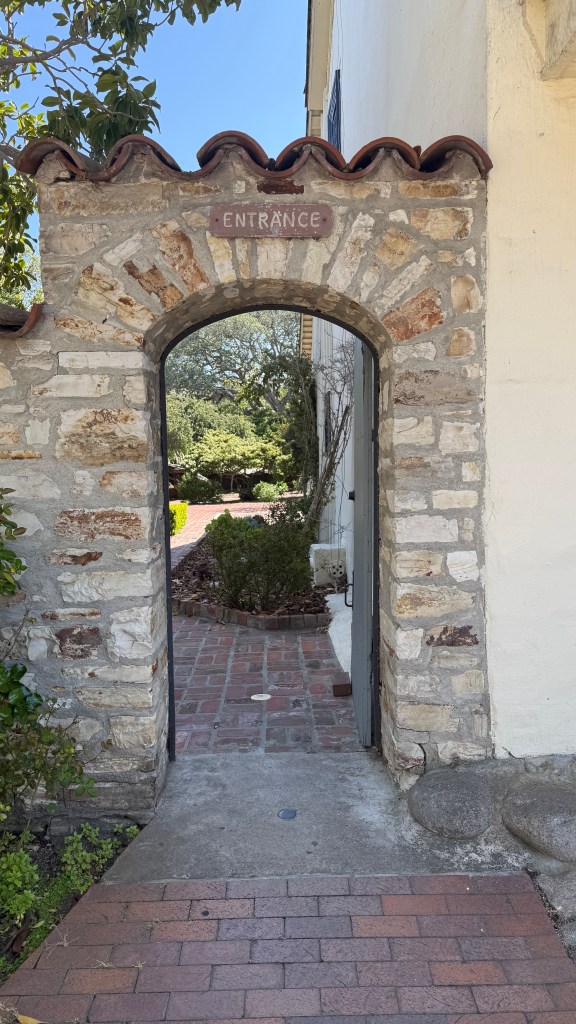
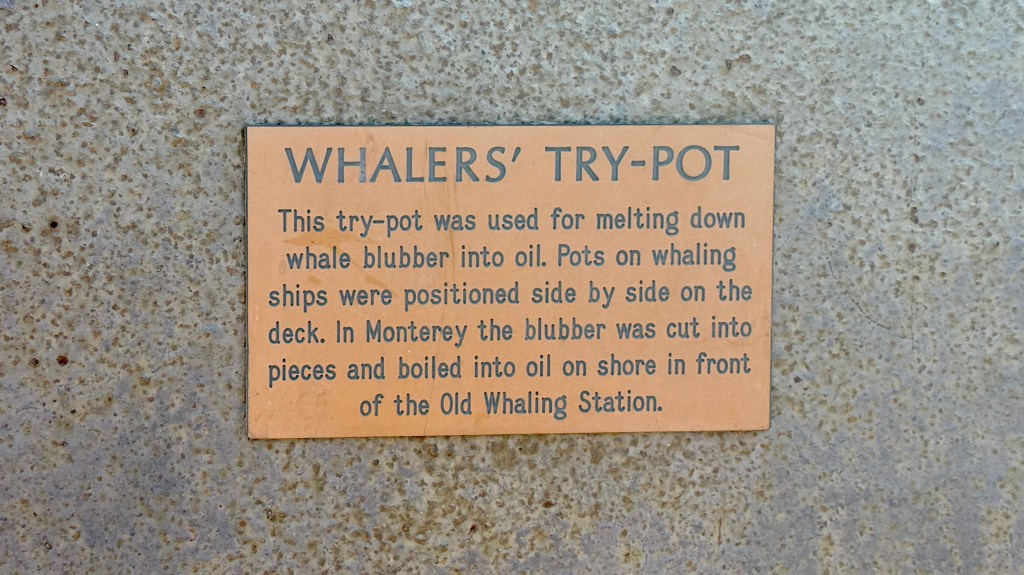
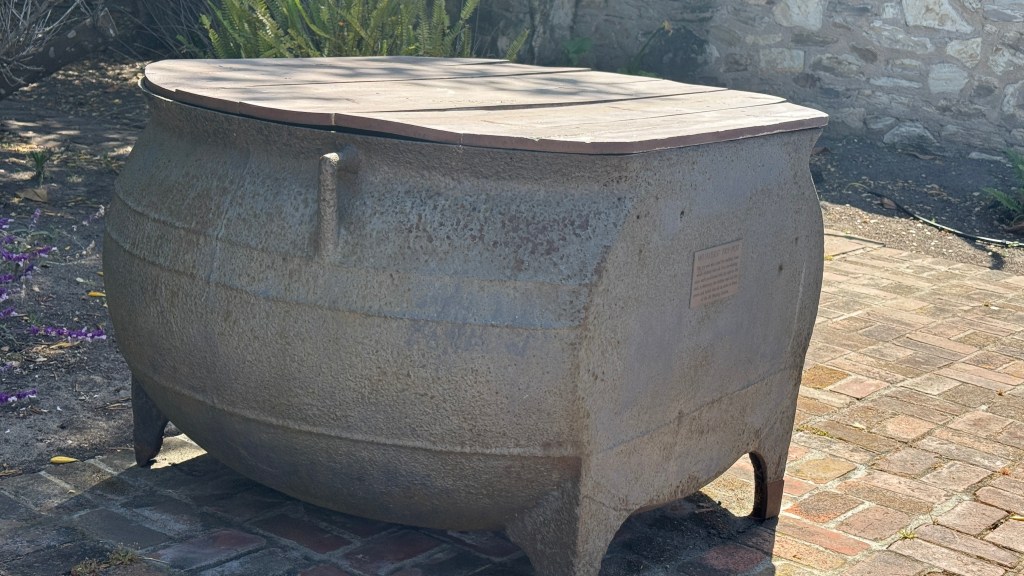
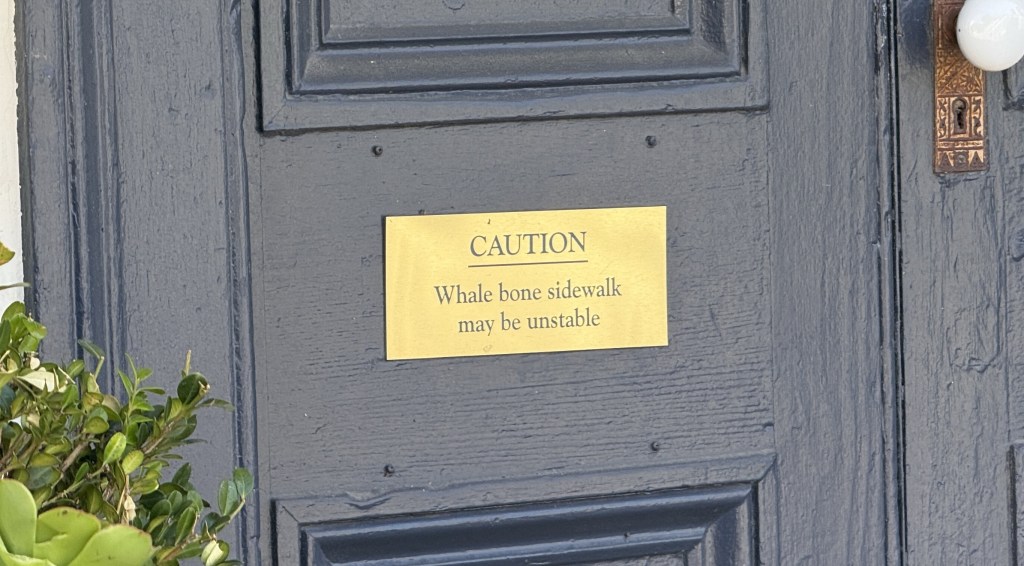
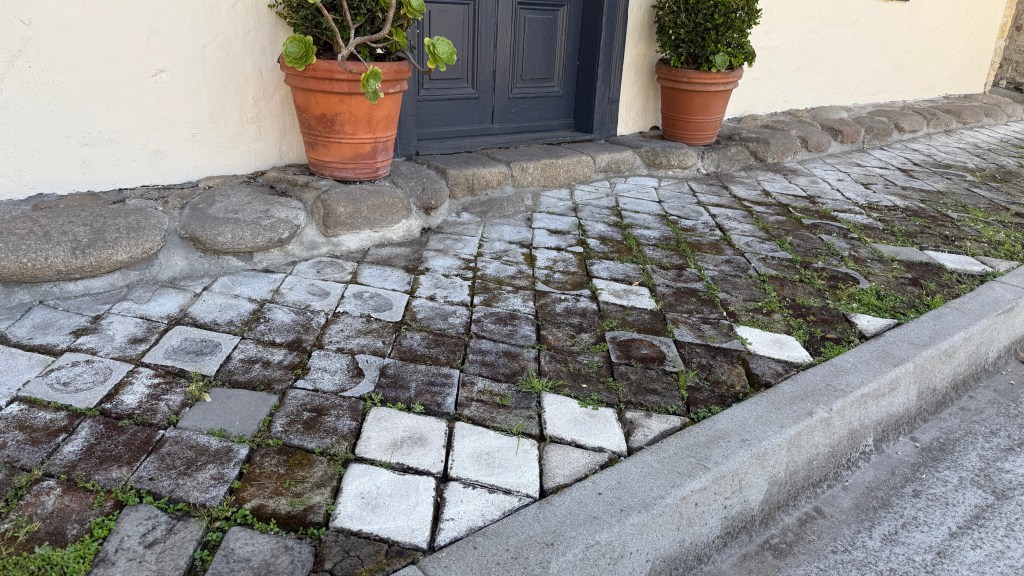
Despite the weight of the history, the site is calm now, held by gardens and courtyards. It’s the kind of juxtaposition Monterey does well: the beauty and the truth sitting side by side.
California’s First Theater & the Quiet Corners of the Past
Wander a bit farther and you arrive at California’s First Theater, its dark wood exterior shaded by trees and framed by a gentle slope of Pacific Street. It’s humble, a little creaky, and thoroughly charming — but more importantly, it’s a reminder that storytelling has always been essential here. Fun Fact: It has also recently re-opened for plays! More details here.
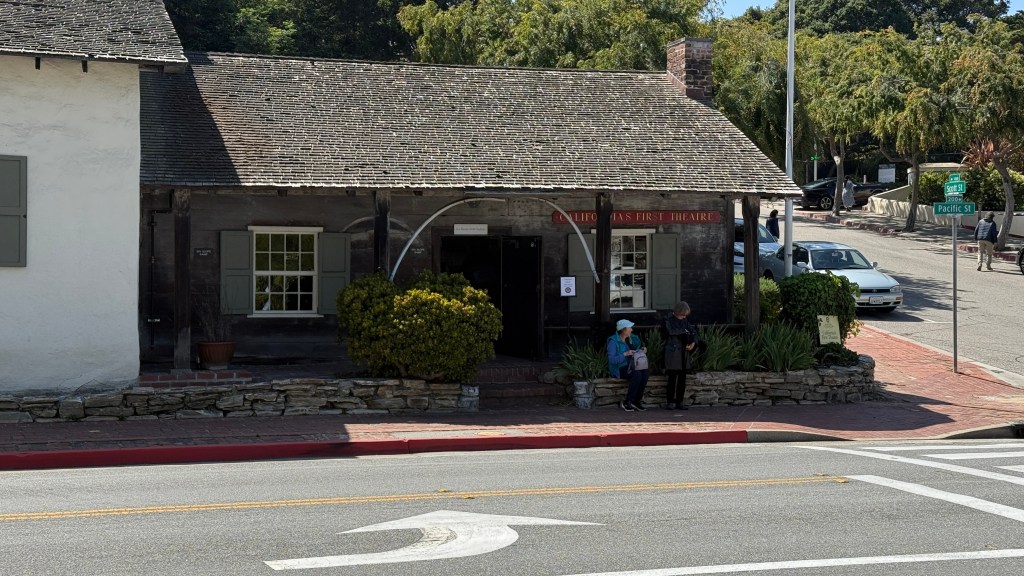
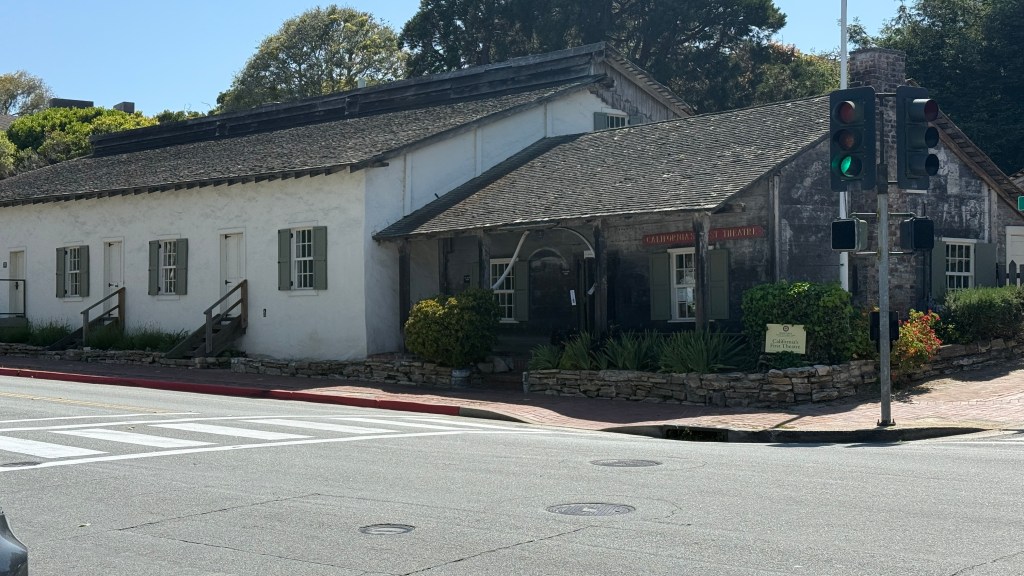
Long before film studios, before digital everything, people gathered in this wooden room to laugh, to listen, to feel connected. The footprint of the building is small, yet it holds an enormous amount of cultural memory.
And between these larger moments, you find the quieter details:
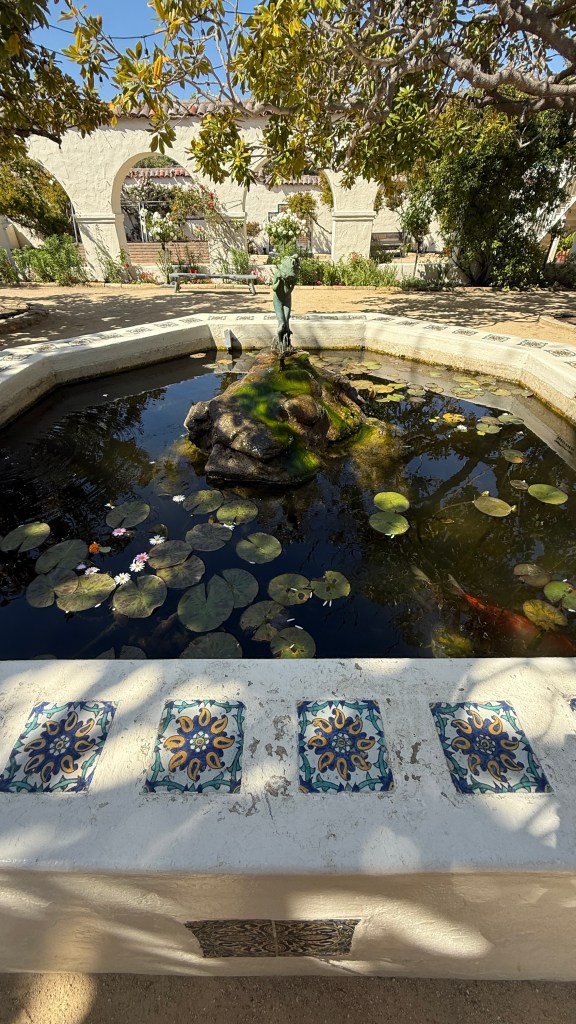
Arched courtyards, fountains dotted with lily pads, tiled benches warmed by the afternoon sun. These spaces soften the complexity of the past and offer a moment of reflection along the way — a way of breathing through the history rather than rushing past it.
Why Walking Matters Here
Old Monterey isn’t a place you absorb from a map or a plaque. It’s a place you understand through movement. Through standing still in the marina breeze, stepping over stone thresholds, wandering through gardens shaped by different eras. The landscape itself carries the arc of the region — Indigenous continuance, colonial imprint, maritime labor, cultural reinvention.
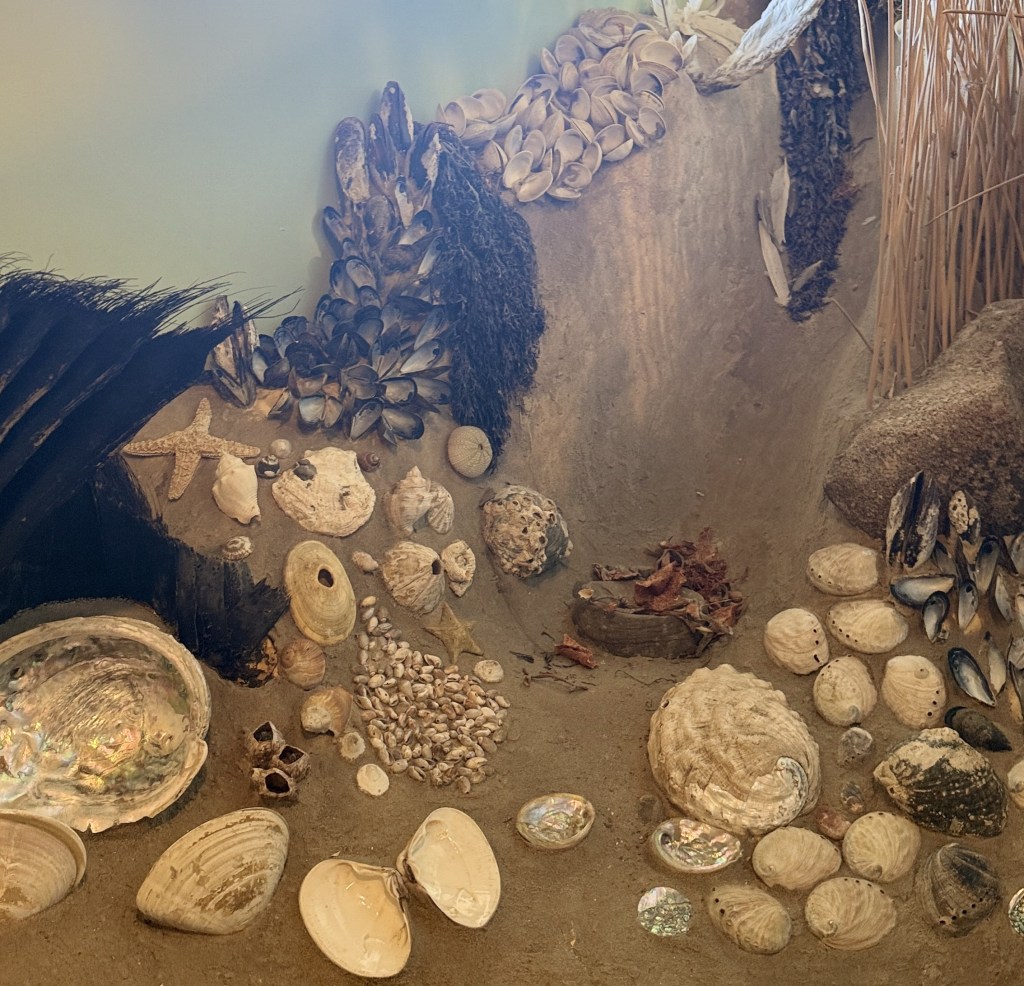
Nothing about Monterey’s story is linear.
Nothing is one-dimensional.
And that is exactly what makes it compelling.
Walking these streets felt like an invitation to see history as something alive — not past tense, but ongoing. A companion rather than a backdrop.
The Recipe for a Layered History
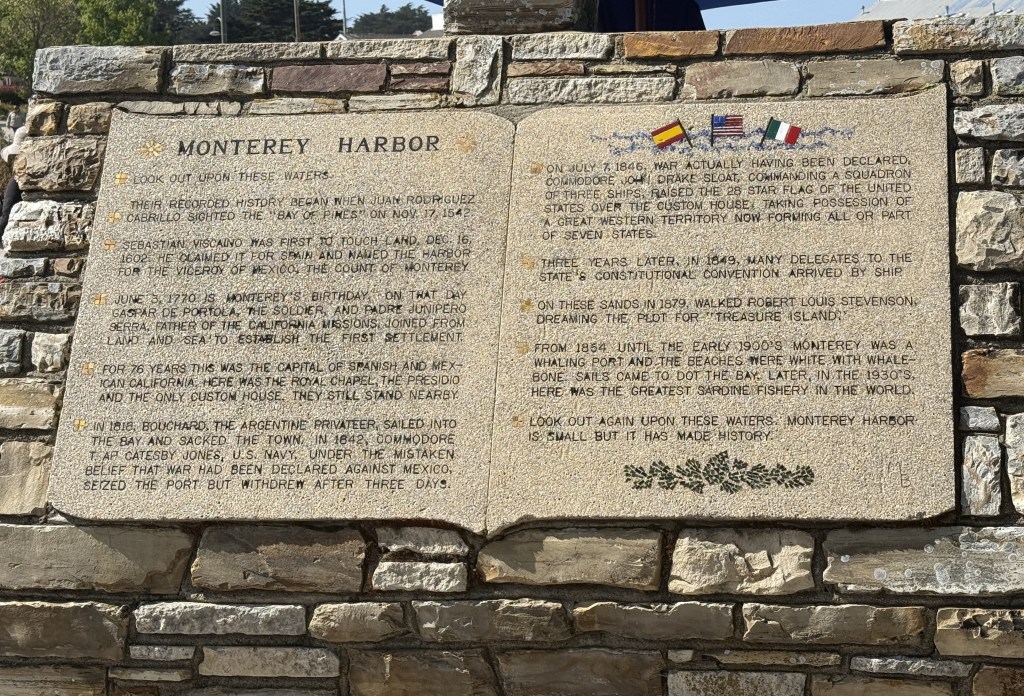
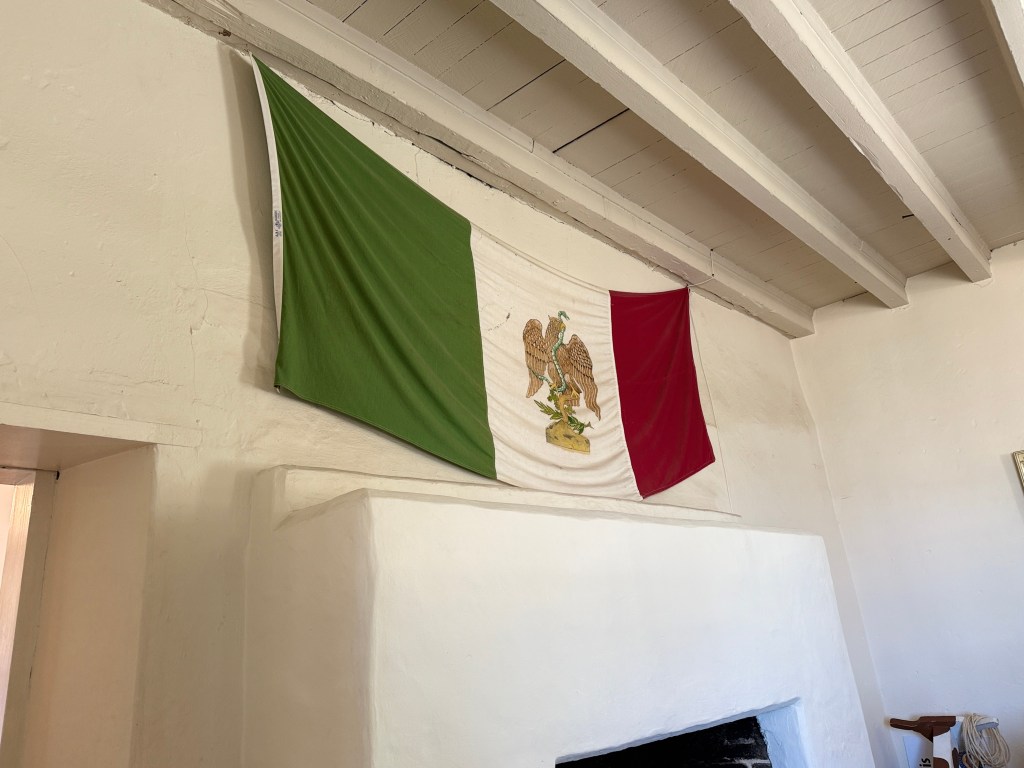
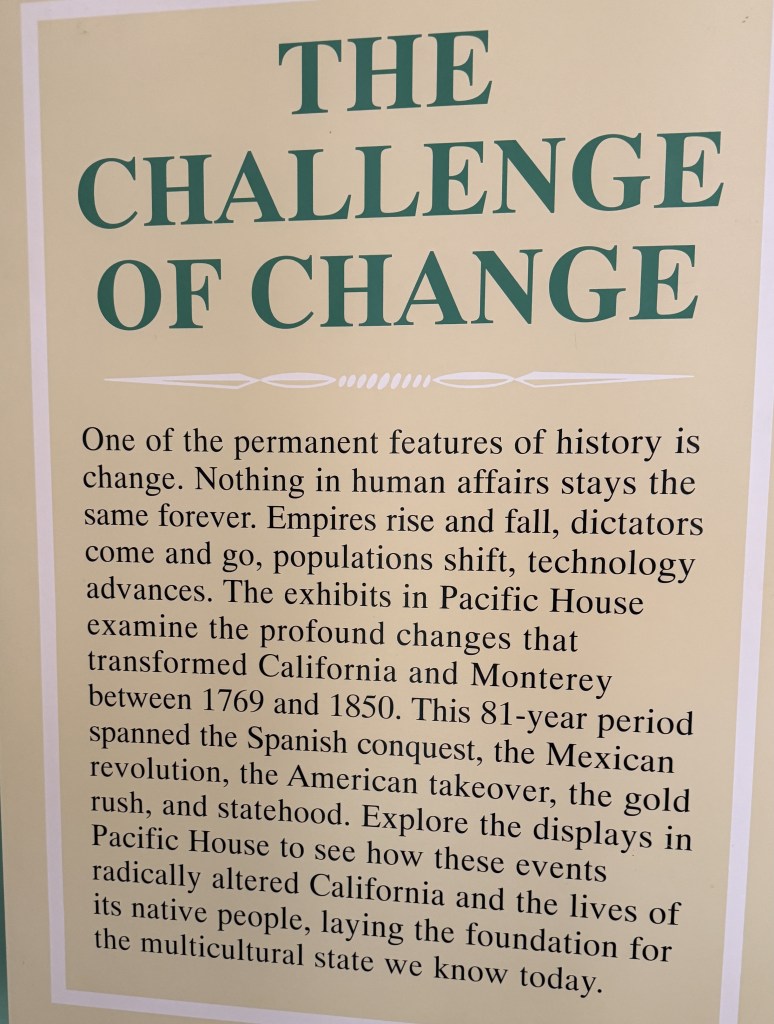
Some of the things I learned that day was that although Monterey’s waterfront looks peaceful today, this small stretch of coastline has lived many lives. It was home for thousands of years to e.g. the Rumsen Ohlone, long before Spain claimed Alta California in the 1700s and reshaped the region through missions and military control. In the early 1800s, under Mexican rule, Monterey grew into a bustling port—its hide-and-tallow trade, foreign ships, and constant political upheaval all flowing through the Custom House, the oldest government building in California. And in 1846, during the Mexican–American War, the American flag was raised here, marking yet another dramatic shift in power.
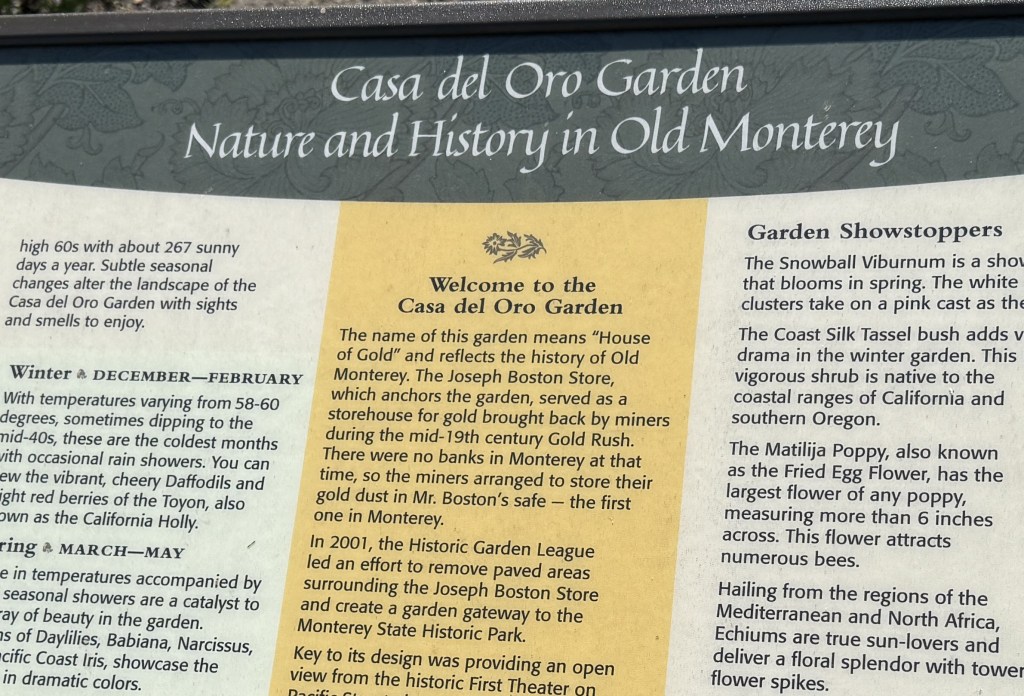
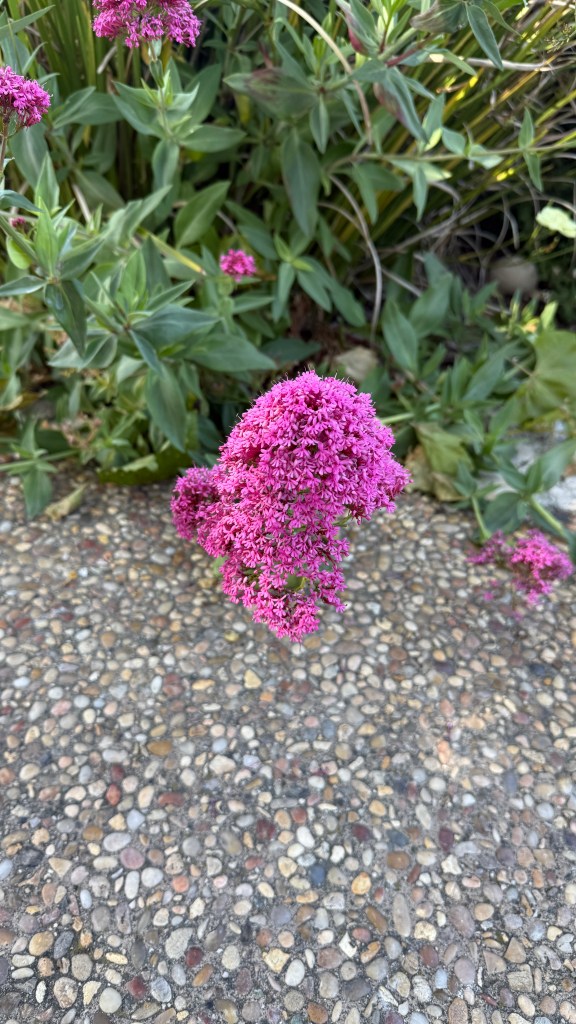
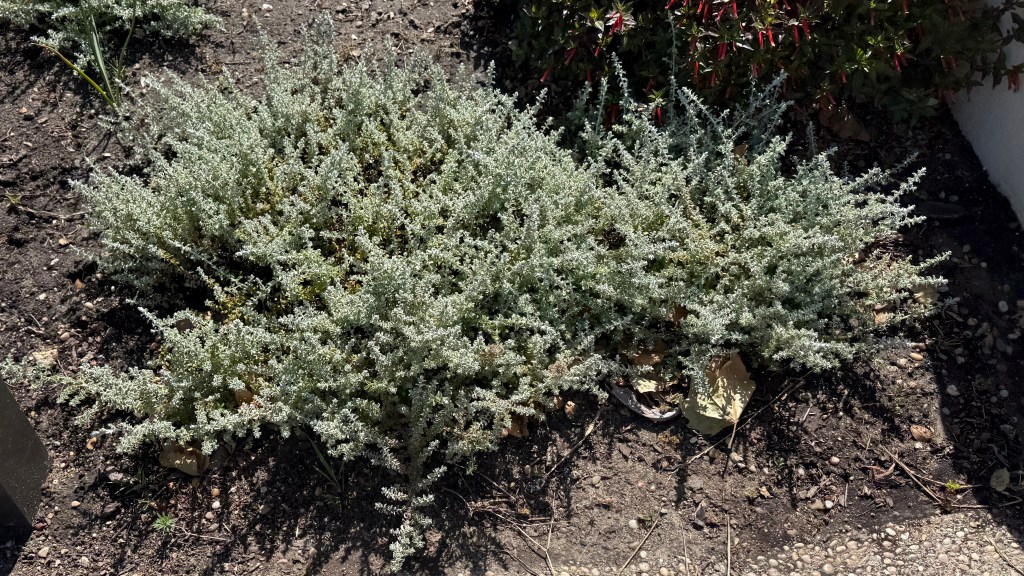
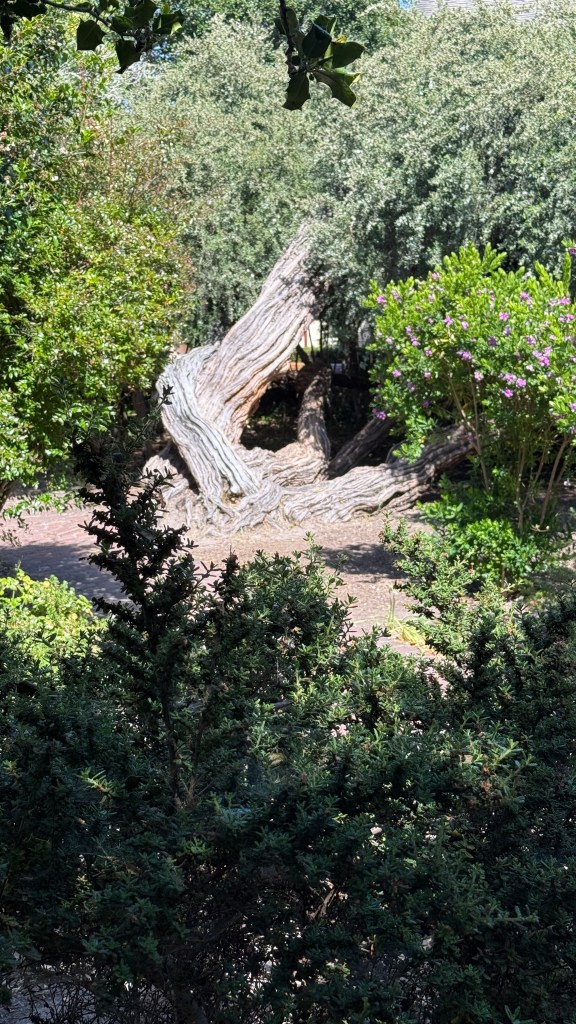
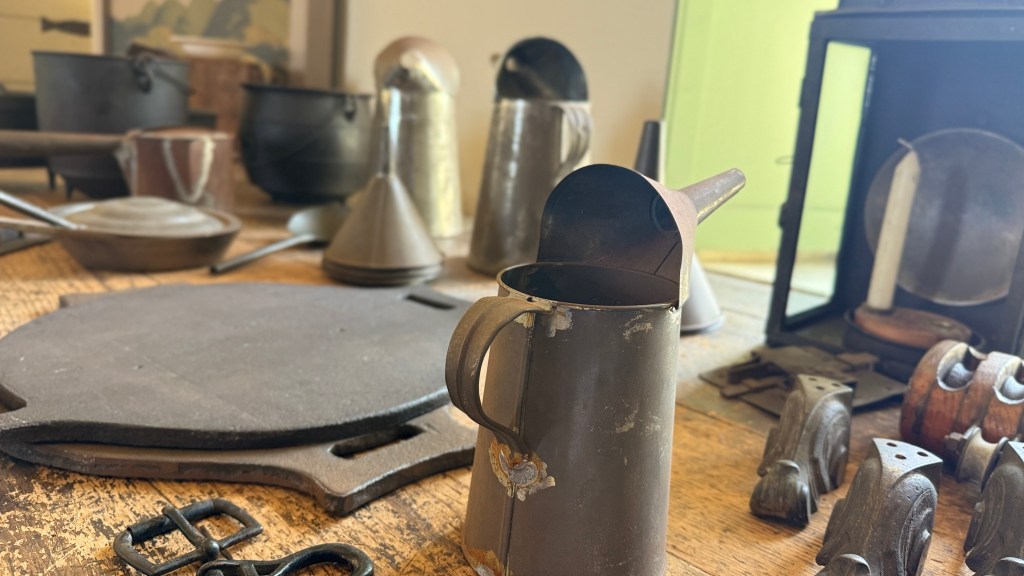
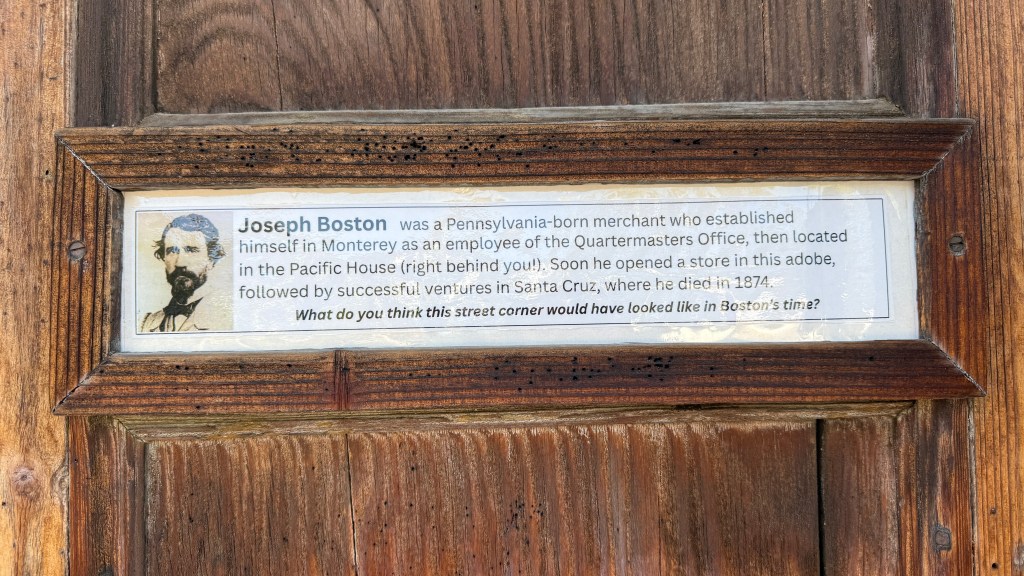
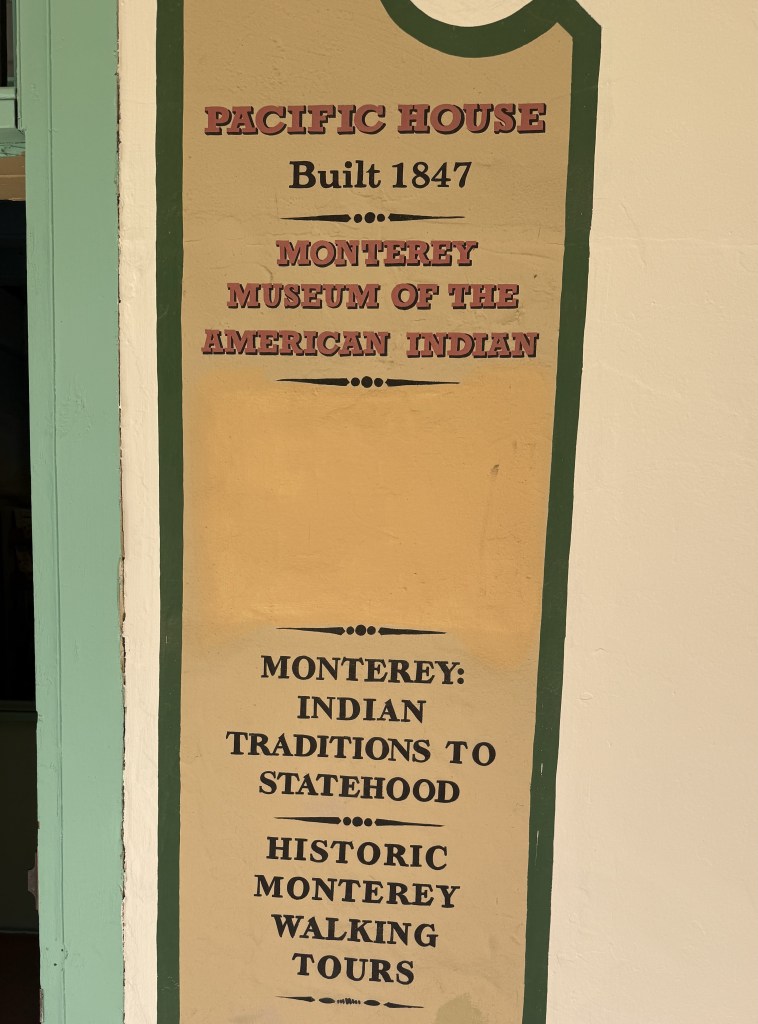
There’s far more history in these few blocks than any single post can cover, but walking through the Custom House, the Pacific House, and their surrounding courtyards gives a glimpse into the layered worlds that once converged here: Indigenous communities, Spanish colonists, Mexican officials, sailors, merchants, soldiers, and families, U.S. government—each leaving a trace.
For readers curious to dive deeper, the California State Parks pages offer excellent background:
📍If You Want to Explore Monterey Yourself
Here are a few helpful notes and links you can use or share, whether you’re planning a visit or simply want to learn more:
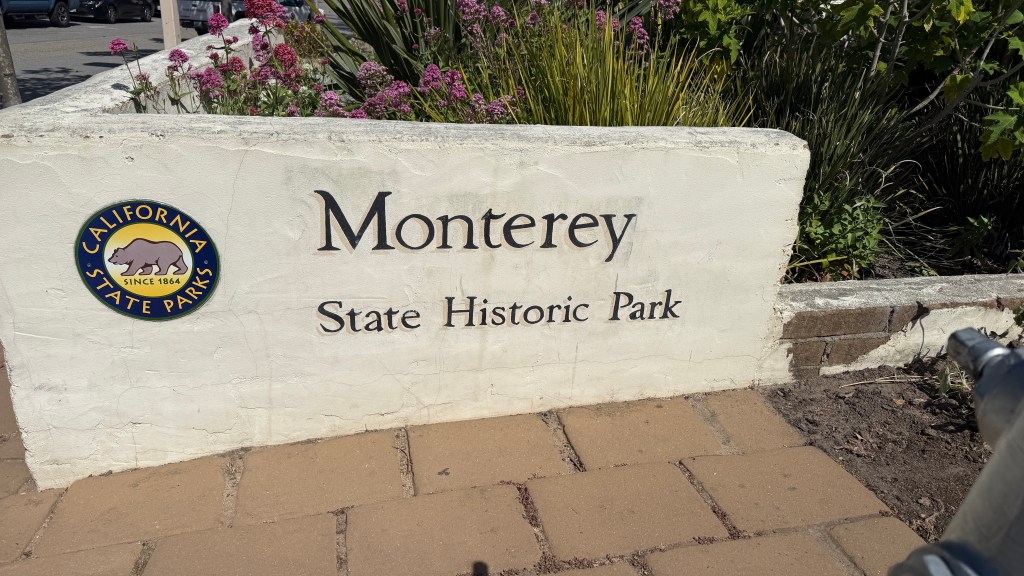
Monterey State Historic Park preserves many of the buildings, gardens, and artifacts of early California: https://www.parks.ca.gov/?page_id=575
The Path of History is a 2-mile self-guided route marked by the yellow medallions in the sidewalk. A downloadable PDF map is available here: https://www.parks.ca.gov/pages/575/files/montereyshpfinalweb080814.pdf Notable sites include: Old Custom House (1827) California’s First Theater Old Whaling Station Pacific House Museum First Brick House Casa del Oro Garden Hours vary by building and season; many are open mid-morning through late afternoon.
Closing Reflection
Old Monterey reminds us that history isn’t something you leave behind. It’s something woven into the ground you walk on — decisions and people that shaped what we see and so much of what we don’t. They are present, remembered-whether you notice it at first or not. These streets and courtyards and harbors remind us that beauty and complexity can coexist, that memory lives in landscapes, and that awareness deepens everything we experience.
A pause spent walking through this place felt grounding, humbling, and unexpectedly hopeful — the kind of presence I want to carry with me into whatever comes next. Until next week, try exploring by just following what catches your eye. You will be so incredibly inspired by what awaits your curiosity with open arms.







Love Sara’s Photos? Own Your Own Here!


